
Investment Accounts in Canada: Every Type Explained (2026)
A complete guide to every type of investment account available to Canadians — TFSA, RRSP, FHSA, RESP, non-registered, and corporate accounts. Learn which one to open first.

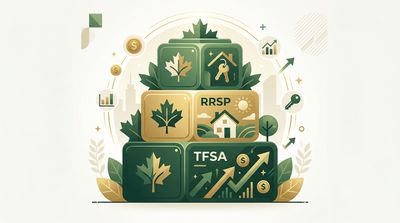
Choosing what to invest in gets all the attention. But choosing where to invest — the account type — matters just as much. Pick the right account and your gains grow tax-free. Pick the wrong one and you could pay thousands more in tax over your lifetime.
Canada offers more registered account types than most countries. That is both an advantage and a source of confusion. This guide walks through every account type available to Canadian investors, explains the tax treatment of each, and tells you exactly which one to open based on your situation.
The 6 Account Types Every Canadian Should Know
Here is a quick overview before we go deep on each one:
| Account | Tax Treatment | 2026 Limit | Best For |
|---|---|---|---|
| TFSA | Tax-free growth, tax-free withdrawals | $7,000/year ($102,000 lifetime if 18+ since 2009) | Most Canadians — first account to open |
| RRSP | Tax-deferred — deduction now, taxed on withdrawal | 18% of earned income, max $32,490 | High earners (income above ~$55K) |
| FHSA | Tax-free growth + tax deduction on contributions | $8,000/year, $40,000 lifetime | First-time home buyers |
| RESP | Tax-deferred + government grants (CESG) | $50,000 lifetime per child | Parents saving for children's education |
| Non-Registered | Taxable — pay tax on gains each year | No limit | After TFSA + RRSP are maxed |
| Corporate | Complex — passive income rules apply | No limit | Business owners with retained earnings |

TFSA (Tax-Free Savings Account)
The TFSA is the most flexible and powerful account for most Canadians. Despite the name, it is not a savings account — you can hold stocks, ETFs, bonds, GICs, and mutual funds inside it.
How it works:
- You contribute after-tax dollars (no tax deduction when you contribute)
- Everything inside grows completely tax-free — dividends, capital gains, interest
- Withdrawals are tax-free and do not affect government benefits like OAS, GIS, or the Canada Child Benefit
- Contribution room is restored the following January after a withdrawal
2026 TFSA Contribution Room: $7,000 per year. If you turned 18 in 2009 or earlier and have never contributed, your total lifetime room is $102,000. Check your exact room on CRA My Account — it updates every February.
Who should prioritize a TFSA:
- Anyone earning under ~$55,000 (where RRSP tax deductions are modest)
- Anyone who might need access to funds before retirement
- Retirees who want tax-free income without affecting OAS clawback
- Young investors with decades of tax-free compounding ahead
Meena earns $48,000 as a dental hygienist. She opened a TFSA at Wealthsimple and contributes $300/month into VGRO (an all-in-one ETF). Because her income is in a lower tax bracket, the RRSP deduction would only save her about 20 cents per dollar. Instead, every dollar of growth in her TFSA is permanently tax-free — no tax when she sells, no tax on dividends, no tax on withdrawal.
Common TFSA mistakes:
- Over-contributing — the CRA charges 1% per month on excess amounts. Always check your room before contributing.
- Day trading inside a TFSA — the CRA can reclassify frequent trading as business income and tax your TFSA.
- Holding US dividend stocks directly — US dividends are subject to 15% withholding tax even inside a TFSA (use an RRSP for US stocks to avoid this).
RRSP (Registered Retirement Savings Plan)
The RRSP gives you a tax deduction today in exchange for paying tax when you withdraw in retirement. The bet is that your tax rate will be lower in retirement than it is now.
How it works:
- Contributions reduce your taxable income (you get a tax refund)
- Investments grow tax-deferred inside the account
- Withdrawals are taxed as regular income
- You must convert to a RRIF by December 31 of the year you turn 71
Who should prioritize an RRSP:
- Canadians earning above ~$55,000 (higher marginal tax rate = bigger deduction)
- Anyone whose employer offers RRSP matching (free money — always take it)
- Those confident their retirement income will be lower than current income
The biggest RRSP mistake I see is people contributing when their income is low, getting a small tax deduction, then withdrawing years later in a higher bracket. If you earn under $50,000, a TFSA is almost always better. Save your RRSP room for your peak earning years.
Special RRSP programs:
- Home Buyers' Plan (HBP): Withdraw up to $60,000 (as of 2024) tax-free to buy your first home. Must repay over 15 years.
- Lifelong Learning Plan (LLP): Withdraw up to $20,000 for full-time education. Must repay over 10 years.
- Spousal RRSP: Contribute to your spouse's RRSP using your deduction room. Useful for income splitting in retirement.
FHSA (First Home Savings Account)
The FHSA is the newest registered account, launched in 2023. It combines the best features of both TFSA and RRSP — you get a tax deduction on contributions AND tax-free withdrawals for a home purchase.
How it works:
- Contribute up to $8,000/year, $40,000 lifetime
- Contributions are tax-deductible (like an RRSP)
- Growth is tax-free
- Withdrawals for a qualifying first home purchase are tax-free
- Must be used within 15 years of opening or by age 71
- Unused amounts can be transferred to an RRSP
Stack the FHSA with the HBP: You can use both the FHSA ($40,000 tax-free) and the Home Buyers' Plan from your RRSP ($60,000) simultaneously. That is up to $100,000 in tax-advantaged funds for a down payment — $200,000 for a couple.
Who should open an FHSA:
- Any Canadian resident aged 18-71 who has not owned a home in the current year or the previous 4 calendar years
- Even if you are not sure about buying, open one now — contribution room does not carry back to before you opened it
RESP (Registered Education Savings Plan)
The RESP is designed for saving for a child's post-secondary education. The government matches your contributions through the Canada Education Savings Grant (CESG).
How it works:
- Contribute up to $50,000 lifetime per beneficiary (no annual limit)
- Government adds 20% matching via CESG — up to $500/year per child ($7,200 lifetime)
- Low-income families may also receive the Canada Learning Bond (CLB) — up to $2,000 with no personal contributions required
- Growth is tax-deferred; when withdrawn by the student, it is taxed in their hands (usually at a very low rate)
The optimal RESP strategy: Contribute $2,500/year per child to maximize the annual $500 CESG. Avoid front-loading $50,000 — you will miss years of grant matching.
Non-Registered (Taxable) Accounts
A non-registered account is a regular investment account with no contribution limits and no special tax treatment.
How it works:
- No contribution limits
- Dividends, interest, and capital gains are taxable each year
- Canadian dividends receive preferential tax treatment via the dividend tax credit
- Capital gains are 50% taxable (only half is added to your income) for the first $250,000 in gains annually
- Interest income is taxed at your full marginal rate
When to use a non-registered account:
- After you have maxed your TFSA and RRSP
- For short-term savings goals where you need flexibility
- For holding tax-efficient investments (Canadian dividend stocks, capital-gains-oriented ETFs)
Tax-efficient placement matters: Hold interest-generating investments (bonds, GICs) inside registered accounts. Hold Canadian dividend stocks and growth ETFs in non-registered accounts where they receive preferential tax treatment.
Corporate Investment Accounts
If you own an incorporated business in Canada, you can invest retained corporate earnings through a corporate investment account.
Key considerations:
- Passive investment income over $50,000 annually reduces your small business deduction ($500,000 limit reduced by $5 for every $1 over $50,000)
- Corporate tax rates on investment income are roughly 50% (but partially refundable when dividends are paid out)
- The integration principle means you should end up paying roughly the same total tax whether you invest personally or through a corporation — but timing and cash flow differ significantly
The decision to invest inside a corporation versus personally is one of the most complex areas of Canadian tax planning. The $50,000 passive income threshold changed the math significantly. If your corporation earns more than $50,000 in passive investment income, you start losing the small business deduction — and the tax integration falls apart. Get professional advice before choosing this path.
Which Account Should You Open First?
Here is the decision framework most financial planners recommend:
If your employer matches RRSP contributions, contribute enough to get the full match. This is an immediate 50-100% return on your money.
If you plan to buy a home in the next 15 years, open a FHSA immediately. You get the tax deduction AND tax-free growth. Even if you're not sure, open one — you cannot get contribution room for years before you opened it.
For most Canadians under $55,000 income, the TFSA is the better first choice. Tax-free growth with full flexibility to withdraw anytime.
Higher earners benefit more from the RRSP tax deduction. Contribute enough to bring your taxable income down to a lower bracket.
Once registered accounts are maxed, invest in a taxable account with tax-efficient holdings.
Best Investment Accounts by Bank and Brokerage
Not all brokerages are equal. Here are the top options for Canadians:
Bank-specific options:
- TD Direct Investing — $9.99/trade, best research tools, full integration with TD banking
- RBC Direct Investing — $9.99/trade, strong platform, integrates with RBC banking
- BMO InvestorLine — $9.99/trade, good for BMO clients who want bank integration
- Wealthsimple — $0 commission on Canadian stocks/ETFs, best mobile app, no minimum
- Questrade — $0 ETF purchases, $4.95 stock trades, good research, lower-cost alternative to big banks
Canadian-specific tip: All major Canadian brokerages support TFSA, RRSP, FHSA, and RESP accounts. The account type is just a "wrapper" — you can hold the same investments (ETFs, stocks, bonds) inside any of them. Choose your brokerage based on fees and features, not account types.
How Investment Accounts Are Protected in Canada
Your investments are protected through two systems:
CDIC (Canada Deposit Insurance Corporation) — Covers deposits (savings accounts, GICs) up to $100,000 per eligible deposit category. TFSA, RRSP, and joint accounts each have separate $100,000 coverage.
CIPF (Canadian Investor Protection Fund) — Covers securities (stocks, ETFs, bonds) up to $1 million per account category if your brokerage becomes insolvent. This protects against brokerage failure, not investment losses.
Your investments are NOT insured against market losses. CIPF protects you if your brokerage goes bankrupt and your assets are missing — not if your stocks drop in value. That is normal market risk.
Tax Comparison: The Same Investment in Different Accounts
Let us say you invest $10,000 in a Canadian dividend ETF that earns 8% annually ($500 in dividends + $300 in capital gains) over 10 years in Ontario:
| Account | Value After 10 Years | Tax Paid Over 10 Years | Net Benefit vs Non-Registered |
|---|---|---|---|
| TFSA | ~$21,589 | $0 | +$2,840 |
| RRSP | ~$21,589 (pre-tax) | ~$4,318 on withdrawal | +$1,200 (if lower bracket at withdrawal) |
| Non-Registered | ~$18,749 | ~$2,840 | Baseline |
The right account can mean thousands of dollars in your pocket over a decade. For a 30-year timeline, the difference is even more dramatic.
Common Mistakes to Avoid
- Holding cash in registered accounts — Your TFSA and RRSP room is precious. Holding cash wastes tax-free growth potential. Invest it.
- Ignoring the FHSA — If you qualify, open one now even if you are not buying soon. You lose room you cannot reclaim.
- Contributing to an RRSP when income is low — Save your RRSP room for high-earning years. Use a TFSA first.
- Not checking TFSA contribution room — Over-contribution penalties are 1% per month. Log into CRA My Account to verify.
- Putting US stocks in a TFSA — US dividends face 15% withholding tax in a TFSA. Hold US stocks in an RRSP to avoid this.
Account comparison cheat sheet, brokerage comparison, and your first portfolio blueprint — all in one free PDF.
Next Steps
Now that you understand the account types, the next question is what to put inside them. Our beginner's guide to investing in Canada walks you through choosing your first investments, building a portfolio, and setting up automatic contributions.
If you already know you want to use a TFSA, our complete TFSA guide goes deeper on contribution rules, strategies, and common pitfalls.
For those interested in a hands-off approach with ETFs, our ETF investing guide covers everything from VEQT to building a custom portfolio.
Frequently Asked Questions
Get the Canadian Investing Starter Kit — free
Account types, brokerage comparison, and your first portfolio blueprint.
No spam. Unsubscribe anytime. PIPEDA compliant.
Related Guides
How to Start Investing in Canada: A Beginner's Guide
A complete beginner's guide to investing in Canada. Learn about account types, investment options,...
TFSA Guide for Canadians: Maximize Your Tax-Free Savings
Everything you need to know about the TFSA — contribution limits, investment strategies, common...